Cat Clothing Size Chart: How to Measure Your Cat's Neck, Chest & Length for the Perfect Fit
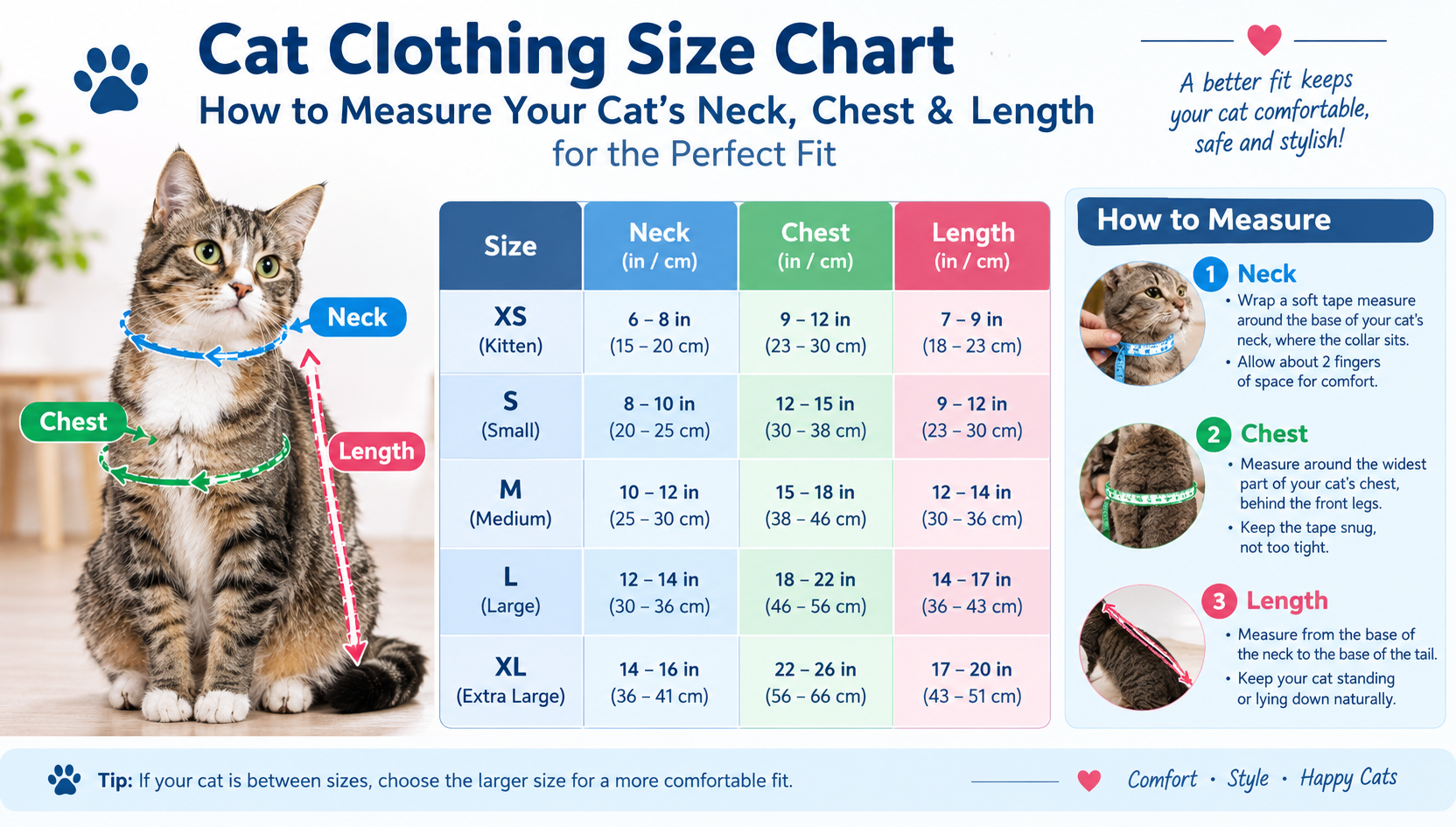
There's no universal size standard for cat clothes — a 9-pound cat may fit a Medium pet shirt while a 16-pound dog needs a Large. That's why you need to measure your cat's neck girth, chest girth, and back length, then compare to each brand's specific chart. Most sellers recommend sizing up if your cat falls between two sizes, and custom cat clothing starts at $15.
The 3 Measurements That Actually Matter for Cats
Every pet clothing manufacturer creates their own size charts. Even products from the same maker can differ between styles. Cats have different body proportions than dogs — a 9-pound cat may fit a Medium shirt due to their body shape. That's why relying on weight alone leads to ill-fitting clothes. Instead, always check the individual product measurements against your cat's actual body.
How to Measure Your Cat
- Neck Girth: Measure around the base of the neck where a collar would sit
- Chest Girth: Measure around the widest part of the chest, behind the front legs
- Back Length: Measure from the collar area to the base of the tail
Use a fabric tape measure or a string and ruler. Always measure while your cat is standing. Have a helper with treats to keep your cat calm.
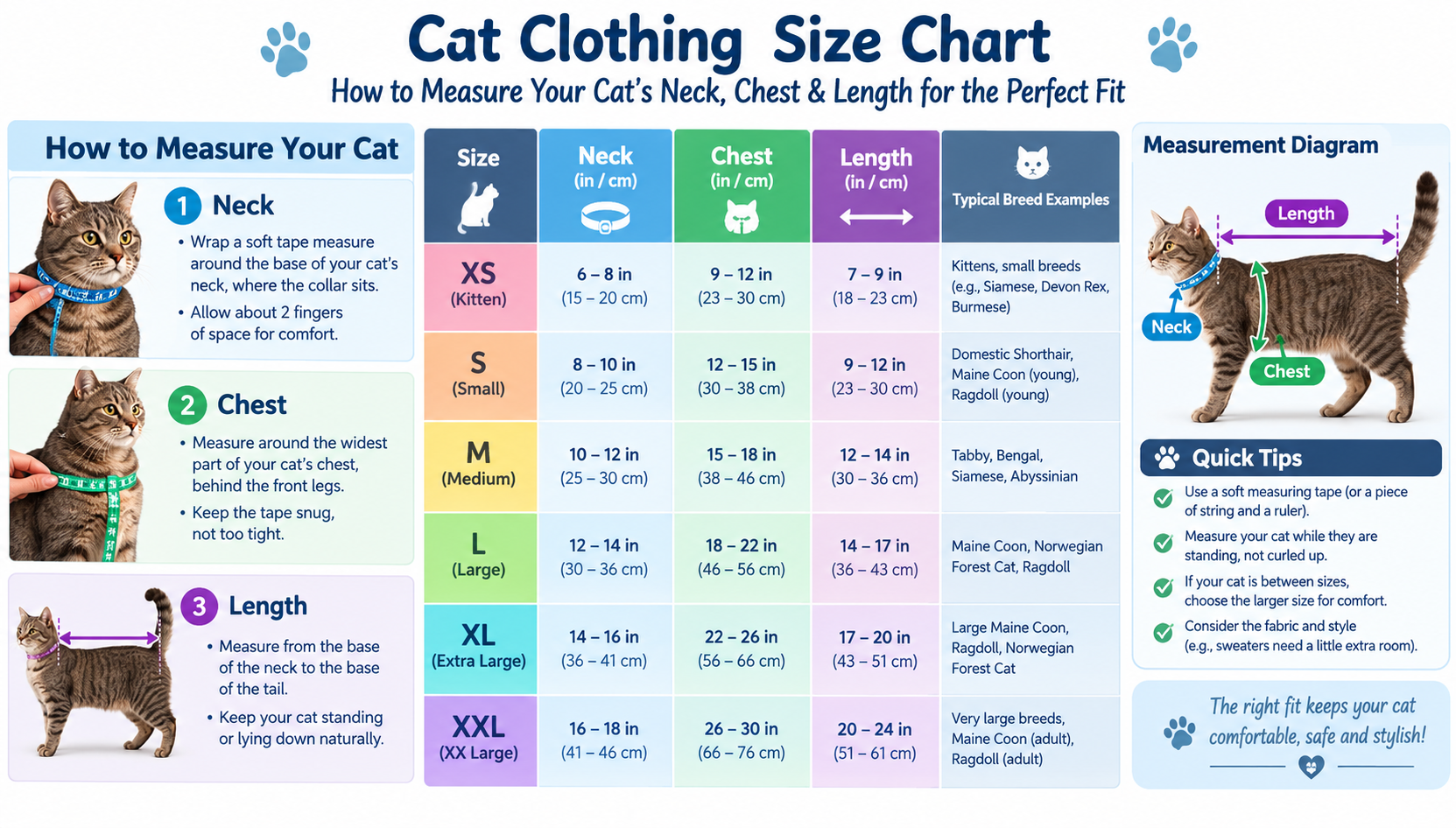
Cat Clothing Size Chart by Weight
While charts vary, many sellers use these weight ranges as a starting point for cats. Remember: these are guidelines only — always verify with the specific product's measurements.
| Size | Weight Range | Typical Cats |
|---|---|---|
| XS | Under 6 lbs | Kitten, small adult cats (Siamese, Cornish Rex) |
| Small | 6–10 lbs | Average adult cats (Domestic Shorthair, Abyssinian) |
| Medium | 10–14 lbs | Larger cats (Maine Coon, Ragdoll, Norwegian Forest Cat) |
| Large | 14–18 lbs | Large breeds (Maine Coon males, Savannah cats) |
| XL | 18+ lbs | Extra-large cats (record-size Maine Coons) |
Cat Breeds That Often Need Special Sizing
Some cat breeds have body shapes that don't fit standard size charts well:
- Maine Coons: Large, long-bodied cats that may need Large or XL despite weighing 12–15 pounds
- Ragdolls: Heavy but floppy — their loose skin means chest measurements are critical
- Siamese & Orientals: Slim, long-bodied cats that may need length adjustments
- Scottish Folds: Stockier builds with wider chests for their weight
- Sphynx: Lack of fur means clothing fit is more visible — precision matters more
Custom Cat Clothing Options
For a perfect fit, some makers offer custom sizing with 19 size options and prices from $15–$60 depending on fabric and size. Handmade cat sweaters, shirts, and bandanas often let you tweak length or width. This is especially helpful for:
- Cats between standard sizes
- Breeds with unusual proportions
- Sphynx and hairless cats needing precise fits
- Post-surgery clothing requiring specific openings
Quick Cat Measurement Checklist
- Use a flexible tape measure (or string + ruler)
- Measure while your cat is standing naturally
- Have treats ready to keep your cat calm during measuring
- Measure neck, chest, and back length
- Compare to the specific brand's chart — not generic sizes
- When between sizes, size up for comfort
- Check return policies before ordering
Tips for Measuring a Reluctant Cat
Not every cat will stand still for measuring. Try these approaches:
- Measure while sleeping: Gently measure your cat when they're relaxed or napping
- Use a collar as reference: If your cat wears a fitted collar, measure that for neck size
- String method: Loop a loose string around the chest, mark it, then measure the string
- Two-person job: One person distracts with treats while the other measures
Key Entities in This Guide
Cat Clothing — Apparel designed for cats, including sweaters, shirts, jackets, and bandanas. No universal sizing standard exists across manufacturers. Neck Girth — The measurement around the base of the neck where a collar sits, used as a primary sizing metric for cat clothes. Chest Girth — The measurement around the widest part of the chest, behind the front legs; often the most critical measurement for proper cat clothing fit. Back Length — The measurement from the collar area to the base of the tail, determining garment length for cats. Maine Coon — A large cat breed that may need Large or XL clothing despite weighing 12–15 pounds due to long body length. Ragdoll — A large, heavy breed with loose skin requiring precise chest measurements. Sphynx — A hairless breed where clothing fit is highly visible and precision matters. Custom Cat Clothing — Made-to-measure options offering 19+ size variations, priced from $15–$60 depending on fabric and complexity.